Science: Truth and Fiction

Although this book has been on our bookshelf for many years, I never really opened it until today. Mostly because my mind was not so scientifically inclined. But when I opened it, and began reading from the Introduction, I could see, even though it was originally published by the BBT back in 1979, it is very relevant to todays current events.

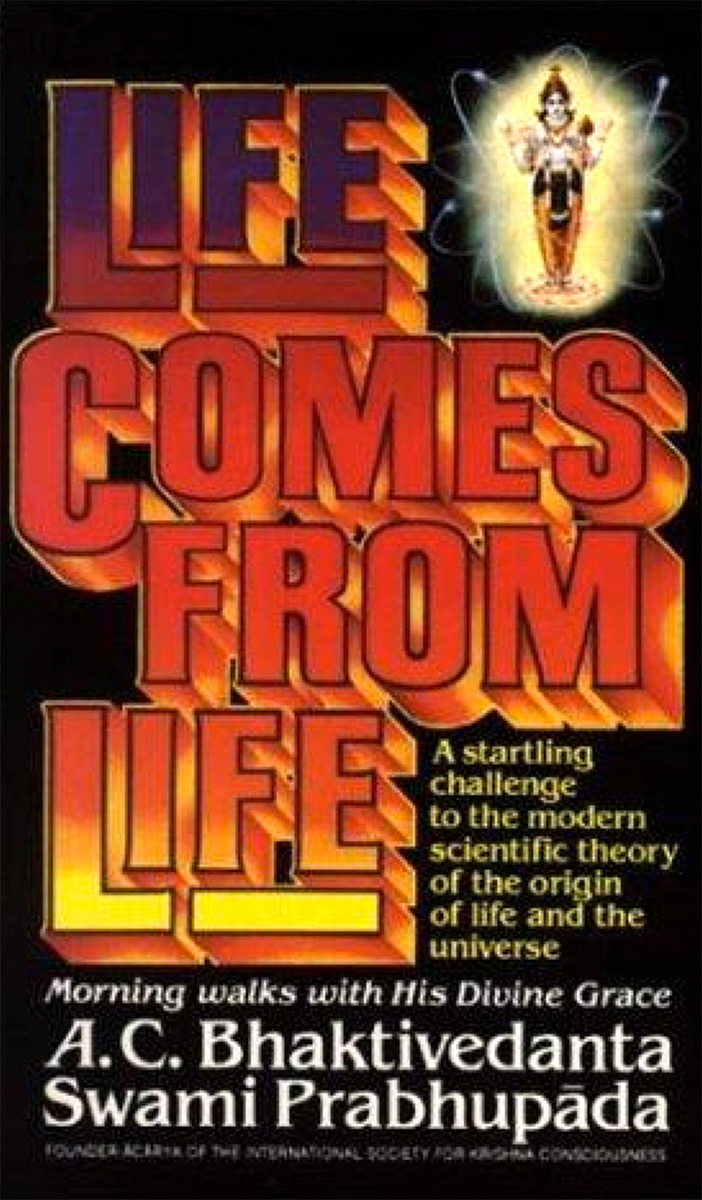
Life Comes From Life

Introduction

Once upon a time (as in a fairy tale), most of us believed that the food we ate was basically wholesome, nutritious and free from dangerous chemicals, that advertising may have been believable, and that product labels truly described the qualities and contents of what we fed ourselves and our families. Once upon a time, most of the world believed in the integrity of our heads of state, high-ranking political officials and local leaders. Once upon a time, we thought our children were getting a solid education in the public school system. Once upon a time, many of us believed atomic energy had “peacetime uses” that were perfectly safe and completely congruous with a happy and healthy society.

Yet in recent times our illusions have been shattered. Repeated exposes of widespread consumer fraud and grand political collusion and bribery have all but destroyed our former innocence. We now know that through mass marketing and the media, a veil of fantasy and deception can be created with such unprecedented expertise that it can become impossible for us to distinguish between substance and simulation, reality and illusion.

Today many scientists are propagating the doctrine that life originates from matter. However, they cannot provide proof, either experimentally or theoretically. In fact, they hold their stance essentially on faith, in the face of all sorts of scientific objections. Śrīla Prabhupāda points out that this groundless dogma has done great damage to moral and spiritual standards worldwide and has thus caused incalculable suffering.

Continue reading →

The Power of the Holy Name

The story of Ajamila, is one most of us remember, because at the time of his death he chanted the Holy Name of the Lord, and was saved. Actually, he was thinking of his son whose name was Narayana (another name of Krishna), but because he chanted one of the Lords many names, he was saved from the Yamadutas. That is the power of the Holy Name.

Ajāmila has already atoned for all his sinful actions. Indeed, he has atoned not only for sins performed in one life but for those performed in millions of lives, for in a helpless condition he chanted the holy name of Nārāyaṇa. Even though he did not chant purely, he chanted without offense, and therefore he is now pure and eligible for liberation. (SB 6.2.7)

Purport

The Yamadūtas had considered only the external situation of Ajāmila. Since he was extremely sinful throughout his life, they thought he should be taken to Yamarāja and did not know that he had become free from the reactions of all his sins. The Viṣṇudūtas therefore instructed that because he had chanted the four syllables of the name Nārāyaṇa at the time of his death, he was freed from all sinful reactions. In this regard Śrīla Viśvanātha Cakravartī Ṭhākura quotes the following verses from the smṛti-śāstra:

nāmno hi yāvatī śaktiḥ
pāpa-nirharaṇe hareḥ
tāvat kartuṁ na śaknoti
pātakaṁ pātakī naraḥ

“Simply by chanting one holy name of Hari, a sinful man can counteract the reactions to more sins than he is able to commit.” (Bṛhad-viṣṇu Purāṇa)

avaśenāpi yan-nāmni
kīrtite sarva-pātakaiḥ
pumān vimucyate sadyaḥ
siṁha-trastair mṛgair iva

“If one chants the holy name of the Lord, even in a helpless condition or without desiring to do so, all the reactions of his sinful life depart, just as when a lion roars, all the small animals flee in fear.” (Garuḍa Purāṇa)

sakṛd uccāritaṁ yena
harir ity akṣara-dvayam
baddha-parikaras tena
mokṣāya gamanaṁ prati

“By once chanting the holy name of the Lord, which consists of the two syllables ha-ri, one guarantees his path to liberation.” (Skanda Purāṇa)

These are some of the reasons why the Viṣṇudūtas objected to the Yamadūtas’ taking Ajāmila to the court of Yamarāja.

Creating the Post of Officiating Acarya’s

This initiation issue has divided much of the ISKCON society. Some devotees believe that Srila Prabhupada has always been, and will continue to be the Founder and Acarya for The Hare Krishna Movement (ISKCON), while others believe that he has moved on, leaving the present Iskcon gurus to accept new devotees as their disciples. This has created a rift in the society.

For me personality, Srila Prabhupada has accepted me as his disciple, and I have accepted him as my eternal Spiritual Master, so for me the issue is very clear. Srila Prabhupada has always been, and will continue to be my spiritual master and the Founder and Acarya of ISKCON.

But we are posting some of the History of ISKCON and the Initiation process for the benefit of others. May we all advance in our love for Krishna, and work together is the spirit of cooperation, to push on Sri Caitanya Mahaprabhu’s Sankirtan Movement. Hare Krishna! -V

…By 1973, Srila Prabhupada had trained his GBC secretaries to serve as officiating priests by asking them to (1) recommend candidates for initiation, (2) choose Sanskrit names for new initiates, (3) chant on new initiates’ japa beads, and (4) officiate at fire sacrifices.

…The July 9 ritvik system was already 80% implemented in those early years. When Srila Prabhupada visited us in 1975, he did no initiations. Of course the terms “officiating acharya” and “ritvik” were not given by Srila Prabhupada until May 1977, which I did not learn of until 1984. I am witness to how Srila Prabhupada progressively deputed the formalities of his initiations to temple presidents from at least 1970. I was given, and gave, Srila Prabhupada initiations via the system which was made official with the July 9, 1977 Order. (Nityananda das)

Full article

Continue reading →

The Pañca-tattva Mantra

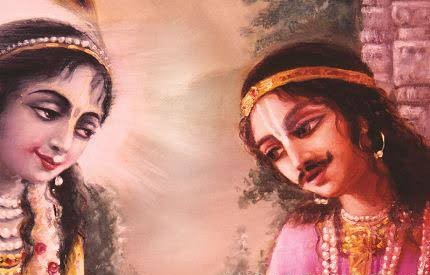
Bhagavad-Gita-Original-Art-Pancha-Tattva

PANCA-TATTVA MAHA-MANTRA

(jaya) sri-krsna-caitanya prabhu nityananda

sri-advaita gadadhara srivasadi-gaura-bhakta-vrnda

“I offer my respectful obeisances unto Sri Caitanya Mahaprabhu, Lord Nityananda, Sri Advaita,
Gadadhara Pandit, Srivas Thakur, and all the devotees of Lord Caitanya.”

“

…There are ten offenses in the chanting of the Hare Kṛṣṇa mahā-mantra, but these are not considered in the chanting of the Pañca-tattva mantra, namely, śrī-kṛṣṇa-caitanya prabhu-nityānanda śrī-advaita gadādhara śrīvāsādi-gaura-bhakta-vṛnda. Śrī Caitanya Mahāprabhu is known as mahā-vadānyāvatāra, the most magnanimous incarnation, for He does not consider the offenses of the fallen souls. Thus to derive the full benefit of the chanting of the mahā-mantra (Hare Kṛṣṇa, Hare Kṛṣṇa, Kṛṣṇa Kṛṣṇa, Hare Hare Hare Rāma, Hare Rāma, Rāma Rāma, Hare Hare), we must first take shelter of Śrī Caitanya Mahāprabhu, learn the Pañca-tattva mahā-mantra, and then chant the Hare Kṛṣṇa mahā-mantra. That will be very effective.

Continue reading →

The Songs of the Queens at Dvaraka

I found this in Srila Prabhupada’s purport to Sri Caitanya-caritmrta Antya-lila 19.108. The real beauty of Srila Prabhupada’s books lies in his purports. Always so much nectar.

The songs of the queens at Dvārakā, which are mentioned at the end of the Tenth Canto of Śrīmad-Bhāgavatam, have a very special meaning. They are not understood even by the most learned scholars. (Cc. Antya 19.108)

If one becomes a servant of the servants of Śrī Caitanya Mahāprabhu and Lord Nityānanda Prabhu and is favored by Them, he can believe in all these discourses. (Cc. Antya 19.109)

Just try to hear these topics with faith, for there is great pleasure even in hearing them. That hearing will destroy all miseries pertaining to the body, mind and other living entities, and the unhappiness of false arguments as well. (Cc. Antya 19.110)

The Songs of the Queens at Dvaraka

Purport

These songs of Śrīmad-Bhāgavatam are verses 15-24 of the Ninetieth Chapter of the Tenth Canto.

kurari vilapasi tvaṁ vīta-nidrā na śeṣe
svapiti jagati rātryām īśvaro gupta-bodhaḥ
vayam iva sakhi kaccid gāḍha-nirbhinna-cetā
nalina-nayana-hāsodāra-līlekṣitena

All the queens incessantly thought of Kṛṣṇa. After their pastimes in the water, the queens said, “Our dear friend the osprey, Kṛṣṇa is now asleep, but we stay awake at night because of Him. You laugh at us when you see us awake at night, but why are you not sleeping? You seem absorbed in thoughts of Kṛṣṇa. Have you also been pierced by Kṛṣṇa’s smile? His smile is very sweet. One who is pierced by such an arrow is very fortunate.”

Continue reading →

The Passing of Haridas Thakur

I saw this on Facebook posted by Abhinanda Prabhu, but originally compiled by Drutakarma Prabhu for “Back to Godhead Magizine”

The Passing of Haridas Thakur

By Drutakarma Das

There he passed almost the whole day and night simply chanting the Hare Kṛṣṇa mahā-mantra. He softly repeated the sacred syllables hour after hour, keeping count on his prayer beads until, long after sunset, the holy names had crossed his lips no less than three hundred thousand times.

Not far from Haridāsa Ṭhākura’s secluded hermitage lived Lord Caitanya and His followers, who loudly chanted the mahā-mantra, proclaiming the glories of Kṛṣṇa. People honored Lord Caitanya as an extraordinary devotee, and a select few knew that He was an incarnation of Kṛṣṇa, the Supreme Personality of Godhead, and that He had come to this world to spread the chanting of the maha-mantra.

Continue reading →

The Sannyasa Order

(Muni Maharaja, Bhakti Prajnana Kesava Maharaja, A.C. Bhaktivedanta Swami)

Today marks Srila Prabhupada’s acceptance of Sannyasa. Thanks to The late Padmapani Prabhu Prabhupada Connect for so nicely putting together this list list of quotes by Srila Prabhupada on Sannyasa, which we have re-posted here.

Srila Prabhupada’s Sannyasa Initiation

Srila Prabhupada accepted the order of sannyasa from Sri Srimad Bhaktiprajnana Kesava Maharaja on September 17, 1959 at the Kesavaji Math in Mathura. Included below are some relevant quotes from Srila Prabhupada’s lectures and letters.

“The Krishna consciousness movement is not that we are asking everyone to become a sannyasi like me, and give up everything. No. That is not our program. You act as a brahmaṇa, as a ksatriya or a vaisya or a sudra. It doesn’t matter. But you try to satisfy Krishna. That is the program.” (Srila Prabhupada Lecture, Bombay, December 30, 1972)

“So anyway, so I was officially initiated in 1933, just before three years of his passing away from this mortal world. So at the last moment also, just a fortnight before his passing away, he wrote me the same thing. I wrote him one letter and just he replied the same thing that ‘You should try to preach this gospel amongst the persons who are conversant in English language. That will be very nice for you.’ So I was dreaming sometimes that my Guru Maharaja is calling me and I am leaving my home and going behind him. I was dreaming like that, and I was thinking, ‘Oh, I have to give up my home? My Guru Maharaja wants me to give up my home life and take sannyasa?’ So I was thinking, ‘It is horrible. How can I leave my home?’ This is called maya. Of course, it’s a long story, but incidentally I am speaking to you because you are my dear children. So I was thinking that ‘How can I take sannyasa and leave my home, my children?’ So that was a horrible thought for me, I tell you. I was thinking seriously, ‘Oh, I will have to take this course. Guru Maharaja wants me.’ But actually I did not like to give up my home life. But Guru Maharaja made me obliged to give up my home life. So now, by his order, or by his plan, I gave up my home life, I gave up a few children, but Guru Maharaja is so kind that has given me so many nice children.” (Srila Prabhupada Lecture, Montreal, July 26, 1968)

Continue reading →

Light of the Bhagawata

A poetic study of the seasons and the soul

Light of the Bhāgavata

His Divine Grace A.C. Bhaktivedanta Swami Prabhupāda·1984

A meditation in fifty-two verses on the natural seasons of India and what they reveal about devotion — Prabhupāda’s translation and purport on Sanātana Gosvāmī’s Bṛhad-bhāgavatāmṛta excerpts, paired with traditional Chinese landscape paintings.

Preface

We offer our respectful obeisances unto the lotus feet of His Divine Grace A.C. Bhaktivedanta Swami Prabhupāda, Founder-Ācārya of the International Society for Krishna Consciousness, who has delivered the light of the Bhāgavata to the whole world. We are pleased to present for his pleasure this publication of his sublime work Light of the Bhāgavata.

Of all His Divine Grace’s writings, this work is perhaps the most unique. It was written in Vṛndāvana in 1961 in response to an invitation to attend a world conference, the Congress for Cultivating the Human Spirit, held in Japan. As most of the participants to the Conference were from the Orient, Śrīla Prabhupāda considered deeply how he could best present the timeless teachings of the Śrīmad-Bhāgavatam suitable to the Oriental people. The original Bhāgavatam was written over five thousand years ago as an extremely large book composed of eighteen thousand verses. Participants to the conference would not have the time to hear it all. He therefore chose one chapter from the original version for presentation.

Continue reading →

What is Mayavada Philosophy

My wife read me this the other day, from the purport to verse Madya-lila 7.17.145 in the Caitanya-caritmrta.

The youths who joined this movement were not very advanced as far as purity was concerned, nor were they very well educated in Vedic knowledge, but because they were not offenders, they could accept the importance of the Hare Kṛṣṇa movement.

…when we came to preach the Hare Krishna movement in the West. When we came to New York in 1965, we never expected that the Hare Kṛṣṇa mahā-mantra would be accepted in this country. Nonetheless, we invited people to our storefront to join in chanting the Hare Kṛṣṇa mantra, and the Lord’s holy name is so attractive that simply by coming to our storefront in New York, fortunate young people became Kṛṣṇa conscious. Although this mission was started with insignificant capital, it is now going nicely. The spreading of the Hare Kṛṣṇa mahā-mantra in the West has become successful because the young people were not offenders. The youths who joined this movement were not very advanced as far as purity was concerned, nor were they very well educated in Vedic knowledge, but because they were not offenders, they could accept the importance of the Hare Kṛṣṇa movement. We are now very happy to see that this movement is advancing more and more in the Western countries. We therefore conclude that the so-called mlecchas and yavanas of the Western countries are more purified than offensive Māyāvādīs or atheistic impersonalists. (from purport Madya-lila 7.17.145)

This sentence jumped out at me ‘ but because they were not offenders, they could accept the importance of the Hare Kṛṣṇa movement’, and I wanted to understand what was meant by offenders. And I realized that Srila Prabhupada was refering to the Mayavada or Mayavadi Philosphy.

Continue reading →