Mother Ganges

Some selected quotes on the river Ganges

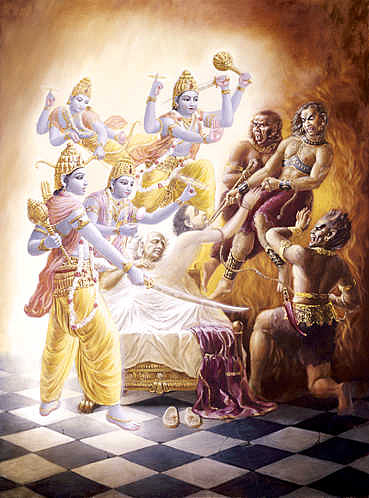
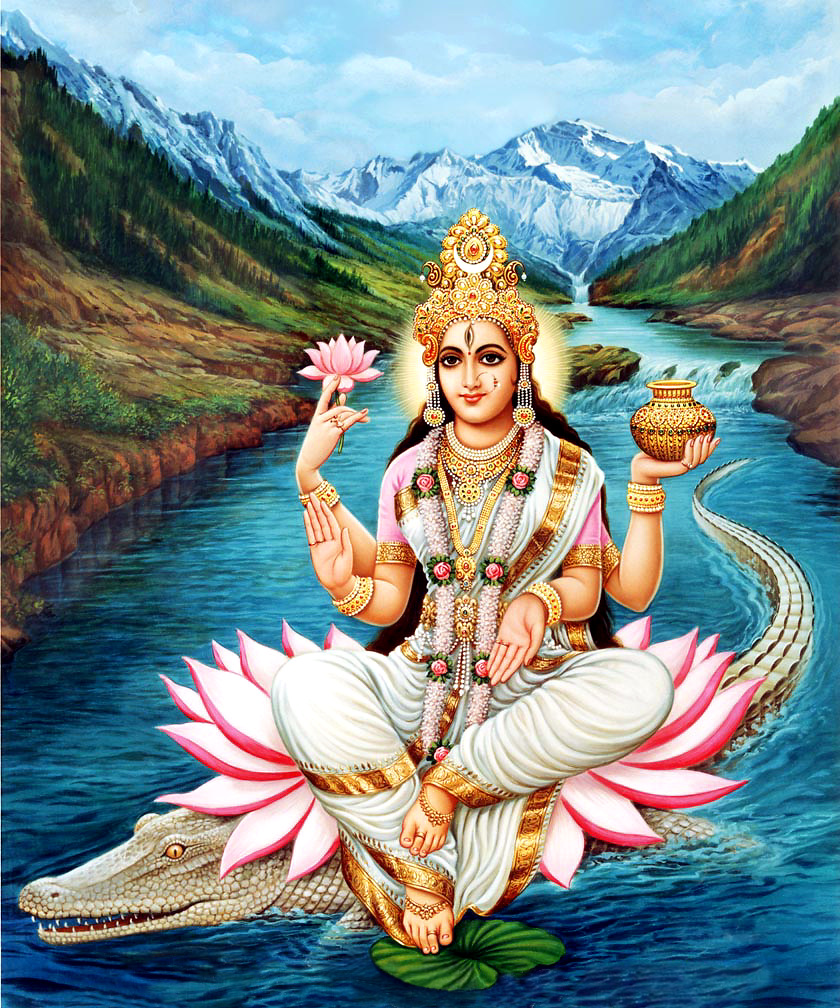
Mother Ganges is worshiped by the water of the Ganges: a devotee takes a little water from the Ganges and offers it back to the Ganges. When the devotee takes the water, mother Ganges does not lose anything, and when the water is offered back, mother Ganges does not increase, but in this way the worshiper of the Ganges is benefited. Similarly, a devotee of the Lord offers the Lord patraṁ puṣpaṁ phalaṁ toyam—a leaf, flower, fruit or water—in great devotion, but everything, including the leaf, flower, fruit and water, belongs to the Lord, and therefore there is nothing to renounce or to accept. One must simply take advantage of the bhakti process because by following this process one does not lose anything but one gains the favor of the Supreme Person. (SB 9.9.12)

When there was a meeting of great sages at Naimiṣāraṇya, Sūta Gosvāmī was reciting Śrīmad-Bhāgavatam, and the importance of the Ganges was stated as follows: “The waters of the Ganges are always carrying the flavor of tulasī offered at the lotus feet of Śrī Kṛṣṇa, and as such the waters of the Ganges are ever flowing, spreading the glories of Lord Kṛṣṇa. Wherever the waters of the Ganges are flowing, all will be sanctified, both externally and internally.” ( Nectar of Devotion Chapter 7)

Continue reading →
Some Day the Tiny Soul Will Want to Get Out of Illusion

Some Day the Tiny Soul Will Want to Get Out of Illusion

Excerpted from Back to Godhead Magazine

Vol. 1, Number 65, 1974

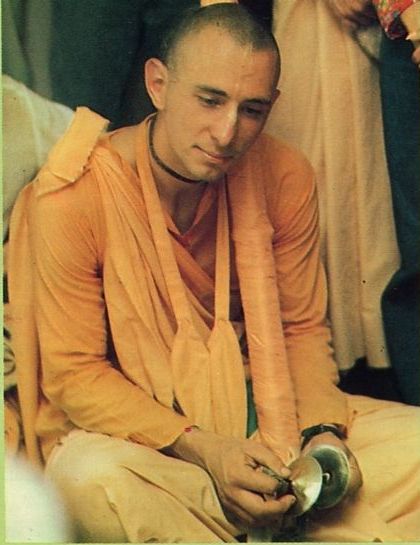
by His Holiness Visnujana Swami

New York City, March 31, 1974


Instructions to the devotees of the Hare Krsna movement

His Holiness Visnujana Svami, joined the Krsna consciousness movement in San Francisco in 1967. He has recently returned to the U.S. from India, where he sailed down the Ganges, stopping at towns and villages along her banks to chant Hare Krsna, distribute food first offered to Krsna and preach Krsna consciousness.

“One may artificially repress the desires of the senses, although the taste for sensual enjoyment remains; but by ceasing such enjoyments, experiencing a higher taste, one is fixed in consciousness.” (Bhagavad-gita 2.59)

When one experiences ruci, which, means a taste for Spiritual life, he can rise above the attraction of the illusory energy by the mercy of the Lord. Then he is able to feel vairagya. Vairagya is the strength that protects us, even when we are neophytes in Krsna consciousness, from breaking the Krsna conscious regulative principles and being attracted to the flickering sensual enjoyments of the mundane world. Ruci, and vairagya-the taste for spiritual life and the strength to maintain it-are rarely achieved.

Continue reading →

The Divine and Demoniac Natures


The Divine and Demoniac Natures

We are in the middle of a pandemic that is killing thousands of people worldwide.

Here in America we have a president that instead of acting in a sympathetic, compassionate way towards the sufferings of others, is instead criticizing and blaming others. This is not a good quality for a leader who should be taking responsibility for the safety and welfare of his citizens. All his self glorification, and his attack on others, in this time of turmoil, I find very disturbing and reminiscent of the description given in the 16th chapter of the Bhagavad-gita entitled “The Divine and Demon Natures”

Arrogance, pride, anger, conceit, harshness and ignorance—these qualities belong to those of demonic nature (Bg. 4.16)

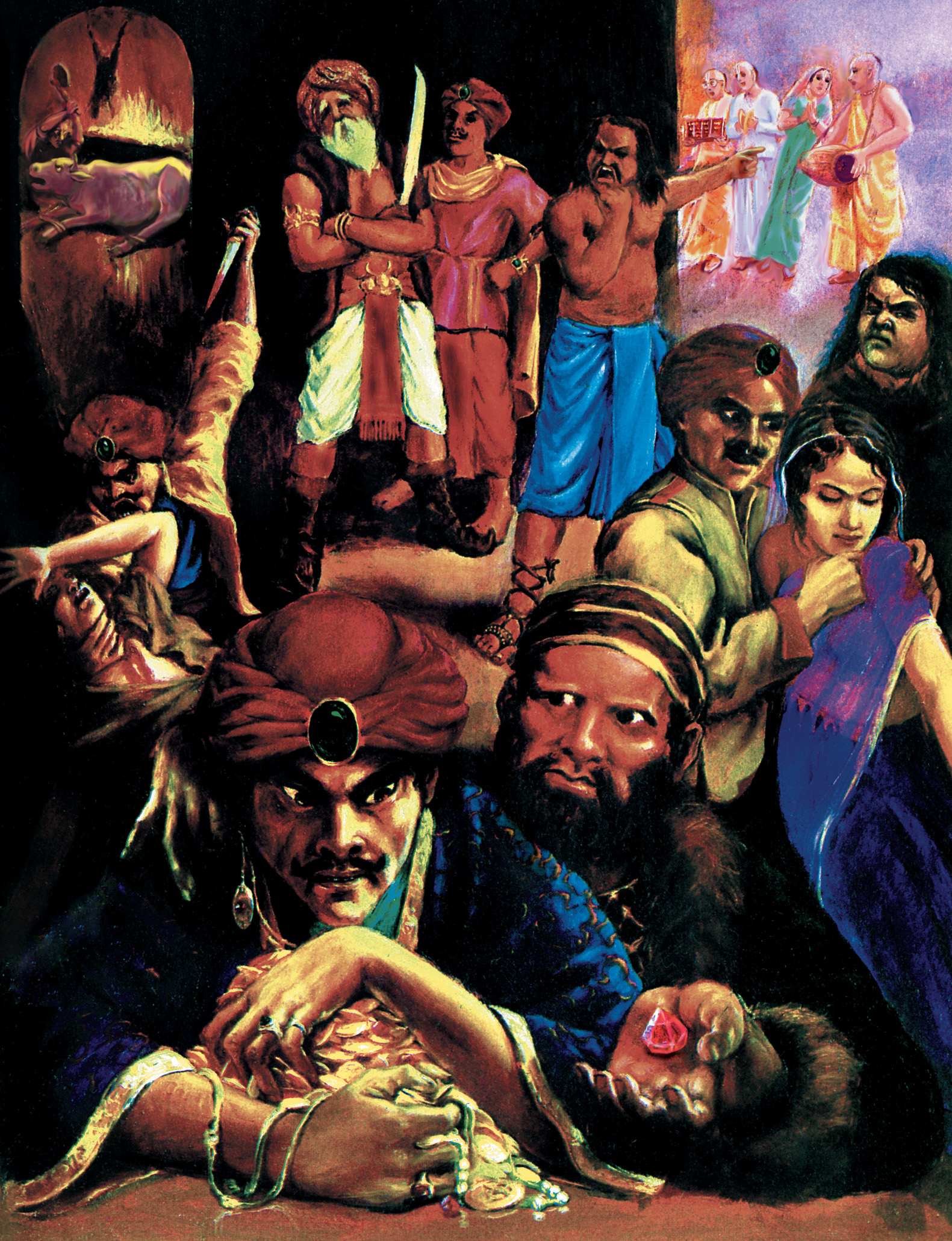
The demoniac person thinks: “So much wealth do I have today, and I will gain more according to my schemes. So much is mine now, and it will increase in the future, more and more. He is my enemy, and I have killed him; and my other enemy will also be killed. I am the lord of everything, I am the enjoyer, I am perfect, powerful and happy. I am the richest man, surrounded by aristocratic relatives. There is none so powerful and happy as I am. I shall perform sacrifices, I shall give some charity, and thus I shall rejoice.” In this way, such persons are deluded by ignorance. (Bg. 13-15.16)

Those who are demoniac do not know what is to be done and what is not to be done. Neither cleanliness nor proper behavior nor truth is found in them. (Bg. 7.16)

Following such conclusions, the demoniac, who are lost to themselves and who have no intelligence, engage in unbeneficial, horrible works meant to destroy the world. (Bg. 9.16)

Full text and purports from chapter 16

Continue reading →

Attaining the Supreme

Next, one may raise the question of how one goes about approaching that abode of the Supreme Lord. Information of this is given in the Eighth Chapter of the Bhagavad-gita. It is said there:

And whoever, at the time of death, quits his body, remembering Me alone, at once attains My nature. Of this there is no doubt.

Whatever state of being one remembers when he quits his body, that state he will attain without fail.

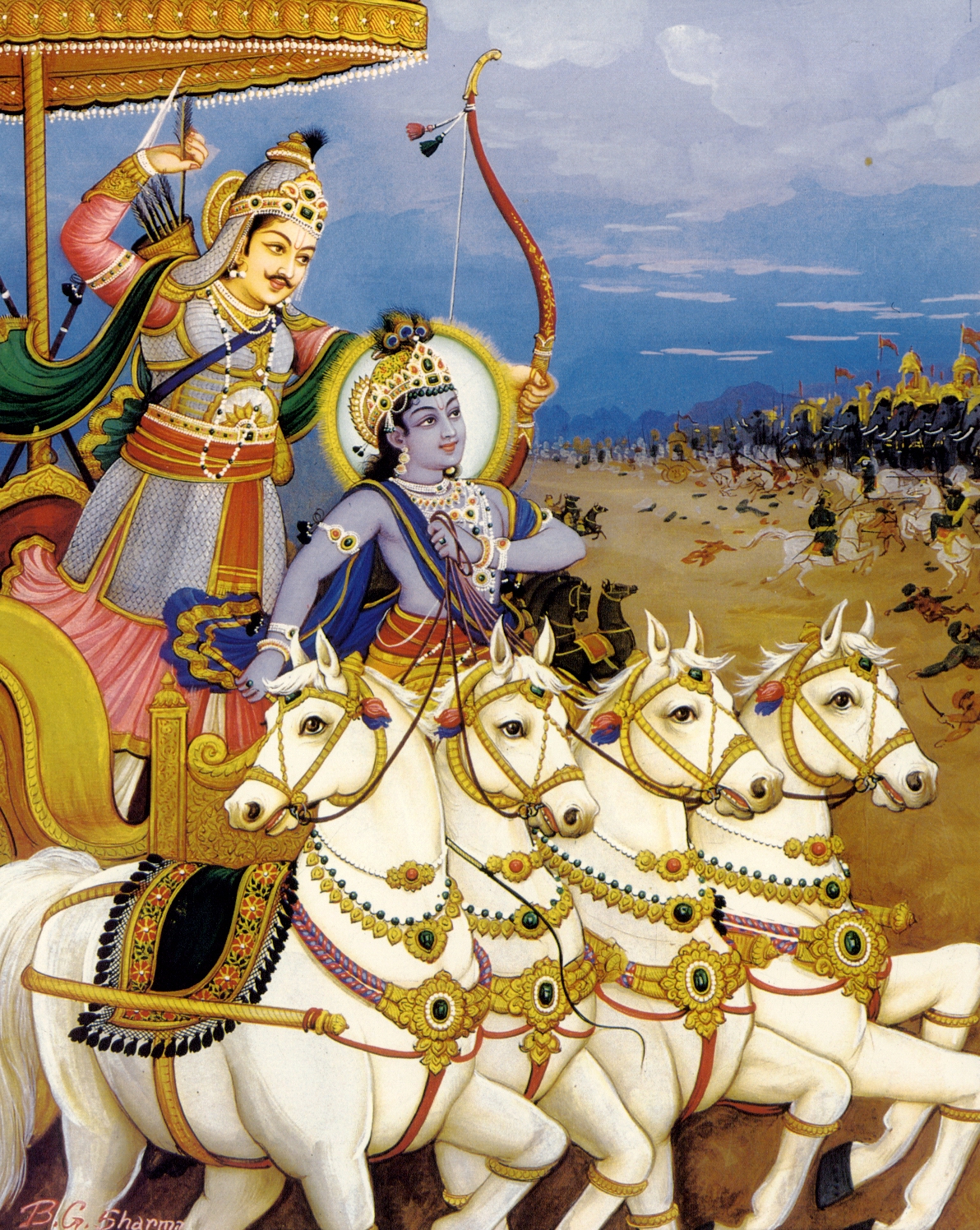
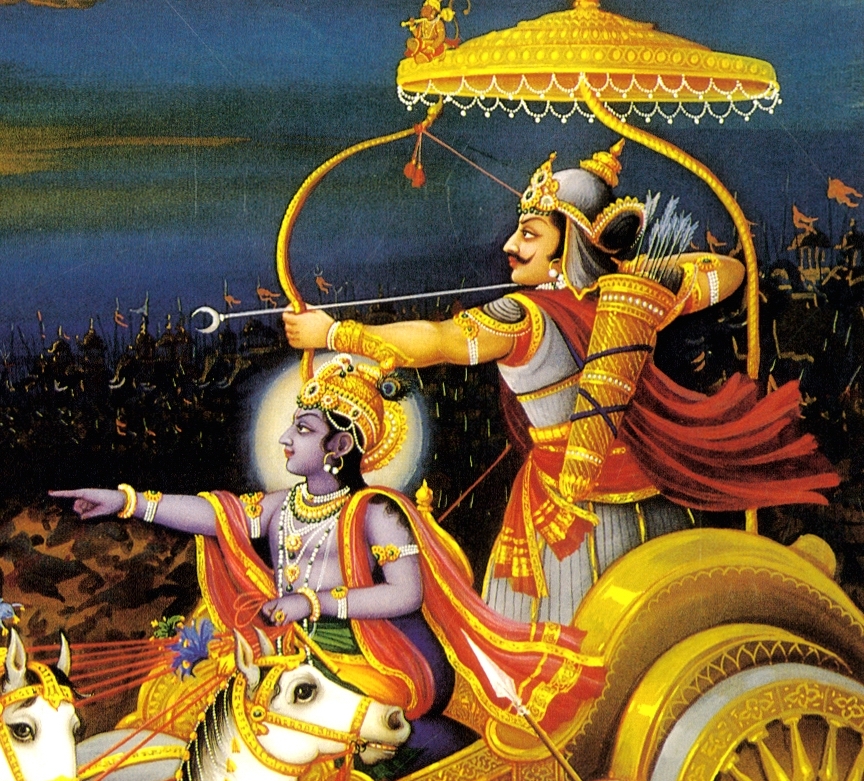
Therefore, Arjuna, you should always think of Me in the form of Kṛṣṇa and at the same time carry out your prescribed duty of fighting. With your activities dedicated to Me and your mind and intelligence fixed on Me, you will attain Me without doubt.

…This instruction to Arjuna is very important for all men engaged in material activities. The Lord does not say that one should give up his prescribed duties or engagements. One can continue them and at the same time think of Kṛṣṇa by chanting Hare Kṛṣṇa. This will free one from material contamination and engage the mind and intelligence in Kṛṣṇa. By chanting Kṛṣṇa’s names, one will be transferred to the supreme planet, Kṛṣṇaloka, without a doubt.

Continue reading →

Milk, the Miracle Food

…Although in this age men can live up to one hundred years, their duration of life is reduced because they do not drink large quantities of milk

…Milk is compared to nectar, which one can drink to become immortal. Of course, simply drinking milk will not make one immortal, but it can increase the duration of one’s life. In modern civilization, men do not think milk to be important, and therefore they do not live very long. Although in this age men can live up to one hundred years, their duration of life is reduced because they do not drink large quantities of milk. This is a sign of Kali-yuga. In Kali-yuga, instead of drinking milk, people prefer to slaughter an animal and eat its flesh.

The Supreme Personality of Godhead, in His instructions of Bhagavad-gītā, advises go-rakṣya, which means cow protection. The cow should be protected, milk should be drawn from the cows, and this milk should be prepared in various ways. One should take ample milk, and thus one can prolong one’s life, develop his brain, execute devotional service, and ultimately attain the favor of the Supreme Personality of Godhead. As it is essential to get food grains and water by digging the earth, it is also essential to give protection to the cows and take nectarean milk from their milk bags. (purport to SB 8.6.12)

Full Text and Purport

Continue reading →

Foods in the Mode of Goodness

food1

I must have woke up hungry, because my meditation this morning was on wholesome, nurturing foods in the mode of goodness.

…The purpose of food is to increase the duration of life, purify the mind and aid bodily strength. This is its only purpose. (from purport to Bg. 17.8-10)

Foods in the mode of goodness increase the duration of life, purify one’s existence and give strength, health, happiness and satisfaction. Such nourishing foods are sweet, juicy, fattening and palatable. Foods that are too bitter, too sour, salty, pungent, dry and hot, are liked by people in the modes of passion. Such foods cause pain, distress, and disease. Food cooked more than three hours before being eaten, which is tasteless, stale, putrid, decomposed and unclean, is food liked by people in the mode of ignorance. (Bhagavad-gita As It Is 17.8-10)

Continue reading →

Teaching and Study Guide to the Bhagavad-gita As It is

Krsna and Arjuna

This is a very nice Study Guide on the Bhagavad-gita As It Is.  It begins with the Introduction to the Bhagavad-gita, some notes on the Original Edition, the significance of the Bhagavad-gita, a philosophical synopsis, chapter by chapter summary, Q & A, and a suguested teaching syllabus.  All in all ,a very nice presentation prepared by disciples and followers of His Divine Grace A. C. Bhaktivedanta Swami Prabhupada.

We are offing it here as a free pdf download that you can view, save or print, by clicking on the following link:

Teaching_and_Study_Guide_to_Bhagavad-gita_As_It_Is

This free download was made available by krishnapath.org  for more free downloads you can go to; http://www.krishnapath.org/library/books-by-devotees-and-followers-of-srila-prabhupada/

Gita Jayanti

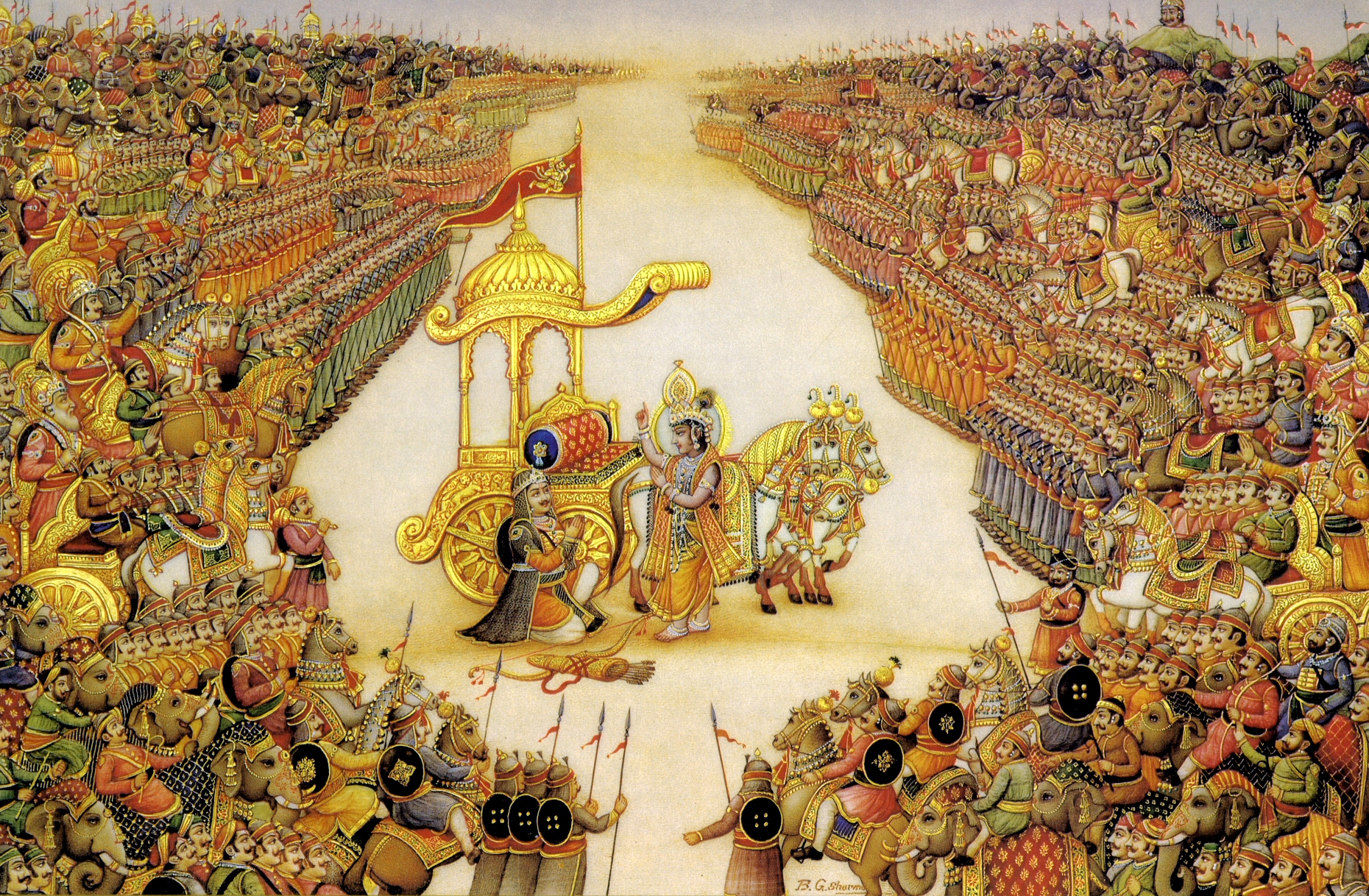
Today we celebrate Gita Jayanti, or the day that the Bhagavad-gita was spoken by Krishna to Arjuna on the Battlefield of Kurukshetra.  In many ISKCON centers around the world, the entire Bhagavad-gita As It Is is read aloud.  We share with you the entire first chapter of the Bhagavad-gita Ads It Is by His Divine Grace A. C. Bhaktivedanta Swami Prabhu

Continue reading →

Preface from Sri Caitanya-caritamrta

We recently decided to start reading everyday from the Sri Caitanya-caritamrta. My wife and I, are starting from page one of the Ādi-līlā, vow to read through the entire Madhya-līlā, and hopefully finish the Antya-līlā. We always talk about how we should make a regulated time to read Srila Prabhupada’s books, but never quite got around to it. But with the advent of a New Year, it is our resolution, to read all 17 Volumes it in its entirety.

As we began our reading, it was interesting to note, that the Preface was written in 1968, years before the publication of Sri Caitanya-caritamrta. It was written for the book “Teachings of Lord Chaitanya”. We are posting the Preface in its entirety. Very good read!

Śrī Caitanya-caritāmṛta
By His Divine Grace A. C. Bhaktivedanta Swami Prabhupāda

Preface

There is no difference between the teachings of Lord Caitanya presented here and the teachings of Lord Kṛṣṇa in the Bhagavad-gītā. The teachings of Lord Caitanya are practical demonstrations of Lord Kṛṣṇa’s teachings. Lord Kṛṣṇa’s ultimate instruction in the Bhagavad-gītā is that everyone should surrender unto Him, Lord Kṛṣṇa. Kṛṣṇa promises to take immediate charge of such a surrendered soul. The Lord, the Supreme Personality of Godhead, is already in charge of the maintenance of this creation by virtue of His plenary expansion, Kṣīrodakaśāyī Viṣṇu, but this maintenance is not direct. However, when the Lord says that He takes charge of His pure devotee, He actually takes direct charge. A pure devotee is a soul who is forever surrendered to the Lord, just as a child is surrendered to his parents or an animal to its master. In the surrendering process, one should: (1) accept things favorable for discharging devotional service, (2) reject things unfavorable, (3) believe firmly in the Lord’s protection, (4) feel exclusively dependent on the mercy of the Lord, (5) have no interest separate from the interest of the Lord, and (6) always feel oneself meek and humble.

Continue reading →