The Deliverance of Nalakuvara and Manigriva

We are currently in the month od Damodara (Kartika), and in addition to lighting a candle to offer the Lord every evening, we sing the Damodarastakam Prayers, which helps us remember the childhood pastimes of Lord Krishna. The following is verse 7.

kuverātmajau baddha-mūrtyaiva yadvat
tvayā mocitau bhakti-bhājau kṛtau ca
tathā prema-bhaktiḿ svakāḿ me prayaccha
na mokṣe graho me ‘sti dāmodareha

O Lord Damodara, in Your form as a baby, Mother Yasoda bound You to a grinding stone with a rope for tying cows, You then freed the sons of Kuvera, Manigriva, and Nalakuvera, who were cursed to stand as trees, and You gave them the chance to become Your devotees. Please bless me in this same way, I have no desire for liberation into Your effulgence.

So…continuining our month long attempt to stay focused on the childhood pastimes of Krsna, during this month of Damodara (Kartika), we bring you this exciting chapter from; “Kṛṣṇa, the Supreme Personality of Godhead”. Today we are posting the chapter entitled “The Deliverance of Nalakūvara and Maṇigrīva”.

Kṛṣṇa, the Supreme Personality of Godhead
By His Divine Grace A. C. Bhaktivedanta Swami Prabhupāda
Chapter Ten

The Deliverance of Nalakūvara and Maṇigrīva

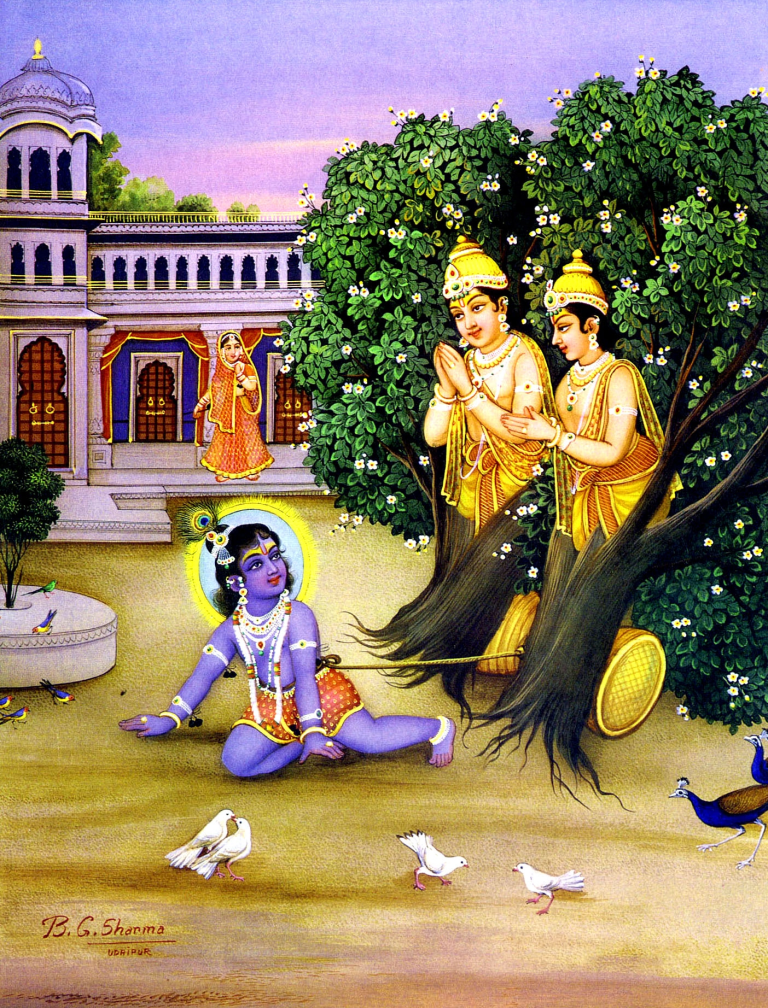
The story of the cursing of Nalakūvara and Maṇigrīva and their deliverance by Kṛṣṇa, under the all-blissful desire of the great sage Nārada, is here described.

The two great demigods, Nalakūvara and Maṇigrīva, were sons of the treasurer of the demigods, Kuvera, who was a great devotee of Lord Śiva. By the grace of Lord Śiva, Kuvera’s material opulences had no limit. As a rich man’s sons often become addicted to wine and women, so these two sons of Kuvera were also addicted to wine and sex. Once, these two demigods, desiring to enjoy, entered the garden of Lord Śiva in the province of Kailāsa on the bank of Mandākinī Ganges. There they drank much and engaged in hearing the sweet singing of beautiful women who accompanied them in that garden of fragrant flowers. In an intoxicated condition, they both entered the water of the Ganges, which was full with lotus flowers, and there they began to enjoy the company of the young girls exactly as the male elephant enjoys the female elephants within the water.

Continue reading →

The Month of Damodara (Kartika)

Today marks the begining of the month of Kartika, or as I like to say, the month of Damodara. As always during this month, we sing the Damodara prayers (Sri Damodararastaka) daily and light a candle to offer. It is also a good time to read from the KRSNA Book and just delight in the childhood pastimes of Lord Krishna.

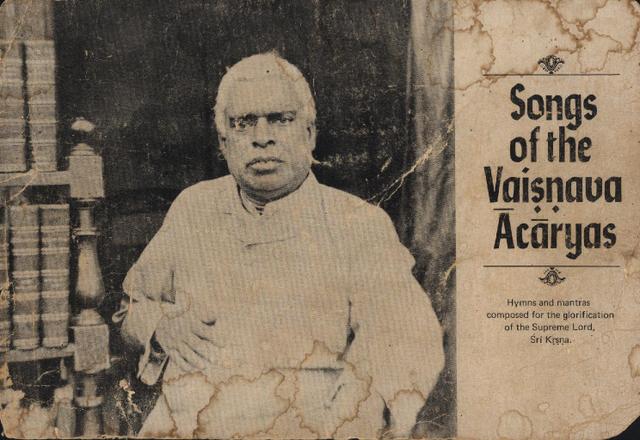
Included below are the lyrics and translations from the original “Songs of the Vaisnava Acaryas” song book.

Sri Damodarastaka
from “Songs of the Vaisnava Acaryas” 1974 Edition

namāmīśvaraḿ sac-cid-ānanda-rūpaḿ
lasat-kuṇḍalaḿ gokule bhrājamanam
yaśodā-bhiyolūkhalād dhāvamānaḿ
parāmṛṣṭam atyantato drutya gopyā

rudantaḿ muhur netra-yugmaḿ mṛjantam
karāmbhoja-yugmena sātańka-netram
muhuḥ śvāsa-kampa-trirekhāńka-kaṇṭha-
sthita-graivaḿ dāmodaraḿ bhakti-baddham

itīdṛk sva-līlābhir ānanda-kuṇḍe
sva-ghoṣaḿ nimajjantam ākhyāpayantam
tadīyeṣita-jñeṣu bhaktair jitatvaḿ
punaḥ prematas taḿ śatāvṛtti vande

varaḿ deva mokṣaḿ na mokṣāvadhiḿ vā
na canyaḿ vṛṇe ‘haḿ vareṣād apīha
idaḿ te vapur nātha gopāla-bālaḿ
sadā me manasy āvirāstāḿ kim anyaiḥ

idaḿ te mukhāmbhojam atyanta-nīlair
vṛtaḿ kuntalaiḥ snigdha-raktaiś ca gopyā
muhuś cumbitaḿ bimba-raktādharaḿ me
manasy āvirāstām alaḿ lakṣa-lābhaiḥ

namo deva dāmodarānanta viṣṇo
prasīda prabho duḥkha-jālābdhi-magnam
kṛpā-dṛṣṭi-vṛṣṭyāti-dīnaḿ batānu
gṛhāṇeṣa mām ajñam edhy akṣi-dṛśyaḥ

kuverātmajau baddha-mūrtyaiva yadvat
tvayā mocitau bhakti-bhājau kṛtau ca
tathā prema-bhaktiḿ svakāḿ me prayaccha
na mokṣe graho me ‘sti dāmodareha

namas te ‘stu dāmne sphurad-dīpti-dhāmne
tvadīyodarāyātha viśvasya dhāmne
namo rādhikāyai tvadīya-priyāyai
namo ‘nanta-līlāya devāya tubhyam

1) To the supreme controller who possesses an eternal form of blissful knowledge, whose glistening earrings swing to and fro, who manifested Himself in Gokula, who stole the butter that the gopis kept hanging from the rafters of their storerooms and who then quickly jumped up and ran in retreat in fear of Mother Yasoda, but was ultimately caught. To that Supreme Lord, Sri Damodara, I offer my humble obeisances.

2) Upon seeing His mothers whipping stick, He cried and rubbed His eyes again and again with His two lotus hands. His eyes were fearful and His breathing quick, and as Mother Yasoda bound His belly with ropes, He shivered in fright and His pearl necklace shook. To this Supreme Lord, Sri Damodara, who is bound with His devotee’s love, I offer my humble obeisances.

3) Those superexcellent pastimes of Lord Krsna’s babyhood drowned the inhabitants of Gokula in pools of ecstasy. To the devotees who are attracted only to His majestic aspect of Narayana in Vaikuntha, the Lord herein reveals: “I am conquered and overwhelmed by pure loving devotion.” To the Supreme Lord, Damodara, my obeisances hundreds and hundreds of times.

4) O Lord, although You are able to give all kinds of benedictions, I do not pray to You for liberation, nor eternal life in Vaikuntha, nor any other boon. My only prayer is that Your childhood pastimes may constantly appear in my mind. O Lord, I do not even want to know Your feature of Paramatma. I simply wish that Your childhood pastimes may ever be enacted in my heart.

5) O Lord, the cheeks of Your blackish lotus face, which is encircled by locks of curling hair, have become reddened like bimba fruit due to Mother Yasoda’s kisses. What more can I describe than this? Millions of opulences are of no use to me, but may this vision constantly remain in my mind.

6) O unlimited Visnu! O master! O Lord! Be pleased upon me! I am drowning in and ocean of sorrow and am almost like a dead man. Please shower the rain of mercy on me; uplift me and protect me with Your nectarean vision.

7) O Lord Damodara, in Your form as a baby, Mother Yasoda bound You to a grinding stone with a rope for tying cows, You then freed the sons of Kuvera, Manigriva, and Nalakuvera, who were cursed to stand as trees, and You gave them the chance to become Your devotees. Please bless me in this same way, I have no desire for liberation into Your effulgence.

8) O Lord, the entire universe was created by Lord Brahma, who was born from Your abdomen, which was bound with a rope by Mother Yasoda. To this rope I offer my humble obeisances. I offer my obeisances to Your most beloved Srimati Radharani, and to Your unlimited pastimes.

Jaya Radha-Madhava; Further Explained

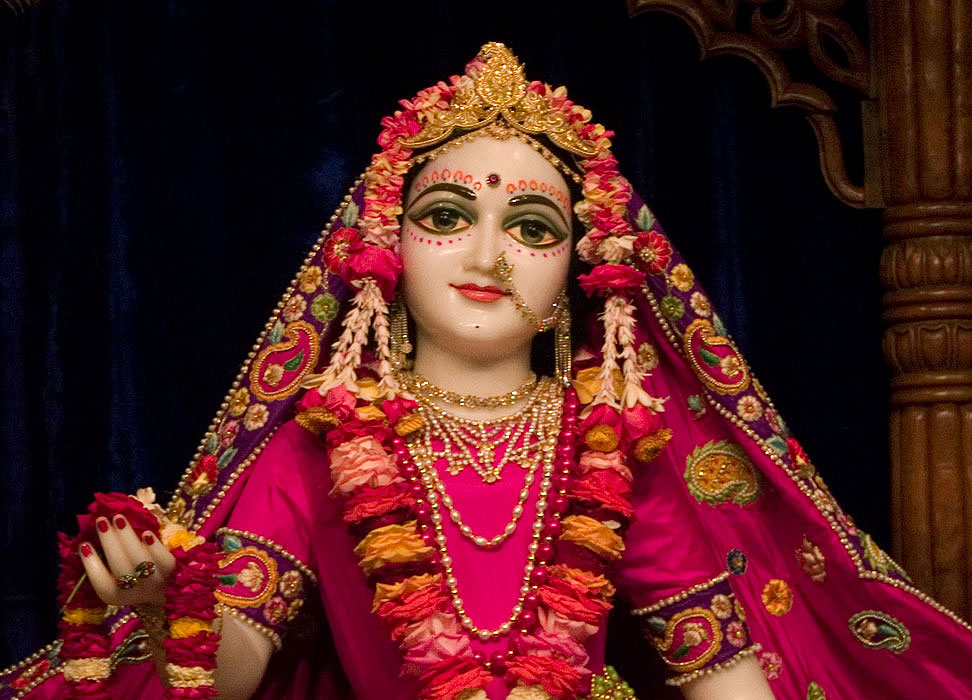
Radha

click on image to enlarge

This is a song that is sung daily, usually before Srimad Bhagavatam class, in all of the Hare Krishna Temples. It is a very beautiful song.

Srila Prabhupada said that this song is “a picture of Vrndavana.” Everything is there–Srimati Radharani, Vrndavana, Govardhana, Yasoda, and all the cowherd boys.

Jaya Rādhā-Mādhava
by Srila Bhaktivinoda Thakura

jaya rādhā-mādhava kuñja-bihārī
gopī-jana-vallabha giri-vara-dhārī

jaya–all glories to: rādhā-mādhava–Rādhā and the Lord of sweetness; kuñja-bihārī–He who enjoys loving pastimes in the groves of Vṛndāvana; gopī-jana-vallabha–the lover of the cowherd maidens of Vraja; giri-vara-dhārī–the holder of the great hill named Govardhana;

Krsna is the lover of Radha. He displays many amorous pastimes in the groves of Vrndavana, He is the lover of the cowherd maidens of Vraja, and the holder of the great hill named Govardhana.

yaśodā-nandana braja-jana-rañjana
yāmuna-tīra-vana-cārī

yaśodā-nandana–the beloved son of mother Yaśodā; vraja-jana-rañjana–the delighter of the inhabitants of Vraja; yāmuna-tīra-vana-cārī–who wanders in the forests along the banks of the river Yamunā

He is the beloved son of mother Yasoda, the delighter of the inhabitants of Vraja, and He wanders in the forests along the banks of the River Yamuna!

Purport to Jaya Rādhā-Mādhava
New York, July 20, 1971

Continue reading →

Disappearance Day of Srila Prabhupada

Dear Srila Prabhupada

Please accept my humble obeisances, and kindly forgive my offences.

I offer my most humble and heartfelt obeisance’s on this most auspicious day of your disappearance. As Srila Bhaktivinoda Thakur has reminded us:

He reasons ill who says that Vaiṣṇavas die,
When thou art living still in sound!
The Vaiṣṇavas die to live, and living try
To spread the holy name around.

For me there is no difference between your appearance day and your disappearance day, for you are very much alive, in the hearts of you disciples. You live on, in your words and instructions.

Recently we visited Buttler PA, where you first preached the mission of Sri Caitanya Mahaprabhu, and we witnessed your humble introduction to America.

Thank you for coming to this world to save us in spite of the tremendous difficulties and obstacles which you had to face alone, depending solely on the mercy of the Supreme Lord Krishna and your eternal spiritual master, Srila Bhaktisiddhanta Sarasvati Thakura.

Thank you for coming to America, and bringing with you so many matchless gifts.  Not only did you bring the message of Krishna and Lord Caitanya, but you brought with you music and art, Vedic medicine, the science of cooking vegetarian food, and the keys to a healthy and productive life, in the service of God.  I may never have learned who is God, had you not appeared on our shores. 

  Although I am an unworthy disciple, full of faults, I approach you with the greatest appreciation, and utmost respect, for you are the greatest spiritual ambassador to spread Krishna Consciousness all over the world. 

I don’t have the words to properly glorify you, so instead, in closing, I want to quote from you, in your closing address to your Spiritual master Srila Bhaktisiddhanta, given in homage in 1936:

Personally, I have no hope for any direct service for the coming crores of births of the sojourn of my life, but I am confident that some day or other I shall be delivered from this mire of delusion in which I am at present so deeply sunk. Therefore let me with all my earnestness pray at the lotus feet of my divine master to allow me to suffer the lot for which I am destined due to my past misdoings, but to let me have this power of recollection: that I am nothing but a tiny servant of the Almighty Absolute Godhead, realized through the unflinching mercy of my divine master. Let me therefore bow down at his lotus feet with all the humility at my command. -Abhay Charan Das 1936

Month of Damodara (Kartika)

mother-yasoda-krishna

” Upon seeing His mothers whipping stick, He cried and rubbed His eyes again and again with His two lotus hands. His eyes were fearful and His breathing quick, and as Mother Yasoda bound His belly with ropes, He shivered in fright and His pearl necklace shook. To this Supreme Lord, Sri Damodara, who is bound with His devotee’s love, I offer my humble obeisances.” (Damodarastakam)

We are now in the month of Damodara (Kartika). In honor and in celebration of the month of Damodara, we will be focusing our attention on the pastimes of Krishna in Vrndavan. Especially Krishna’s childhood pastimes. The following song is sung morning and evening and it is customary to offer a candle or gee lamp as well to a picture of Lord Krsna and Mother Yasoda.

Following song lyrics is a link of Vishnujana Swami chanting the Damodara Prayers

Full song

Continue reading →

Sri Nama Kirtan

Krishna stealing the cloths of the gopis

Krishna is very pleased when we call on Him by His Names, which are associated with His devotees, qualities and pastimes. This song by Bhaktivinoda Thakura is composed of the Nanes of Krsna in different aspects. (from the Songs of the Vaisnava Acaryas)

Today also marks the appearance day of Srila Bhakrivinoda Thakura which we honor with a half day fast.

Śrī Nāma-kīrtana
Chanting of the Holy Names
by Srila Bhaktivinoda Thakura

1) yaśomatī-nandana, 2) braja-baro-nāgara,
3) gokula-rañjana kāna
4) gopī-parāṇa-dhana, 5) madana-manohara,
6) kāliya-damana-vidhāna
7) amala harinām amiya-vilāsā 8) vipina-purandara, 9) navīna nāgara-bora,
10) vaṁśī-badana, 11)suvāsā 12) braja-jana-pālana, 13) asura-kula-nāśana
14) nanda-godhana-rākhowālā
15) govinda mādhava, 16) navanīta-taskara,
17) sundara nanda-gopālā

18) yāmuna-taṭa-cara, 19) gopī-vasana-hara,
20) rāsa-rasika, 21) kṛpāmoya
22) śrī-rādhā-vallabha, 23) vṛndābana-naṭabara,
24) bhakativinod-āśraya

English translation

Continue reading →

Jaya Rādhā-Mādhava; Further Explained

Jaya Rādhā-Mādhava
by Srila Bhaktivinoda Thakura

jaya rādhā-mādhava kuñja-bihārī
gopī-jana-vallabha giri-vara-dhārī

jaya–all glories to: rādhā-mādhava–Rādhā and the Lord of sweetness; kuñja-bihārī–He who enjoys loving pastimes in the groves of Vṛndāvana; gopī-jana-vallabha–the lover of the cowherd maidens of Vraja; giri-vara-dhārī–the holder of the great hill named Govardhana;

Krsna is the lover of Radha. He displays many amorous pastimes in the groves of Vrndavana, He is the lover of the cowherd maidens of Vraja, and the holder of the great hill named Govardhana.

yaśodā-nandana braja-jana-rañjana
yāmuna-tīra-vana-cārī

yaśodā-nandana–the beloved son of mother Yaśodā; vraja-jana-rañjana–the delighter of the inhabitants of Vraja; yāmuna-tīra-vana-cārī–who wanders in the forests along the banks of the river Yamunā

He is the beloved son of mother Yasoda, the delighter of the inhabitants of Vraja, and He wanders in the forests along the banks of the River Yamuna!

Purport to Jaya Rādhā-Mādhava
New York, July 20, 1971

Prabhupāda: So you know this song Jaya Rādhā-Mādhava?

Continue reading →

Month of Damodara: Kartik

Yesterday was the start of the month of Damodara, or as it is otherwise known, the month of Kartik.

Kartik, or the month of Damodar, is considered the best of months and is most auspicious for spiritual advancement. In the Skanda Purana it is stated:

“As Satya-yuga is the best of yugas, as the Vedas are the best of scriptures, as Ganga is the best of rivers, so Kartik is the best of months, the most dear to Lord Sri Krishna.”.

Also in the Skanda Purana it is stated:

“A person who offers a ghee lamp to Lord Krishna during Kartik burns away a collection of sins as big as Mt. Meru or Mt. Mandara, will not take birth again in this world and attains to the eternal spiritual realm where there is no suffering. Even if there are no mantras, no piety, and no purity, everything becomes perfect by such an offering.”

The Padma Purana describes the month of Kartik as Krishna’s favorite month. Devotional activities performed during this holy month are rewarded with greater spiritual results than usual so devotees often take vows to increase their spiritual practices or to simplify their material needs for the entire month. It is a way that they can remember Krishna more and increase their service to Him.

We sing the following song morning and evening and offer a ghee lamp.

Sri Damodarastakam
By Sri Satyavrata Muni
From the original 1974 “Songs of the Vaisnava Acaryas” songbook

This eight sloka prayer is sung morning and evening during the month of Damodara, which begins Friday Oct. 19, 2013

namāmīśvaraḿ sac-cid-ānanda-rūpaḿ
lasat-kuṇḍalaḿ gokule bhrājamanam
yaśodā-bhiyolūkhalād dhāvamānaḿ
parāmṛṣṭam atyantato drutya gopyā

1) To the supreme controller who possesses an eternal form of blissful knowledge, whose glistening earrings swing to and fro, who manifested Himself in Gokula, who stole the butter that the gopis kept hanging from the rafters of their storerooms and who then quickly jumped up and ran in retreat in fear of Mother Yasoda, but was ultimately caught-to that Supreme Lord, Sri Damodara, I offer my humble obeisances.

Continue reading →

Appearance Day of Srila Bhaktivinoda Thakur

Songs of the Vaisnava Acaryas

In honor of the appearance day of Srila Bhaktivinoda Thakur, we are posting the “Songs of the Vaisnava Acaryas” songbook as a free pdf download, or the complete scanned book (Images) [check it out].

Songs of the Vaisnava Acaryas (Free download)

It is with great pleasure that we share with you the Original 1974 Edition of the Songs of the Vaisnava Acaryas, thanks to some very special devotees over at Krishnapath.org who are making all these original books available again and for free. This Song Book and The Hare Krishna Cookbook, were probably my two favorite books as a new devotee. They were so cherished that I had the pages laminated in plastic to preserve them. I must have known instinctually then that these books were endangered, because I also have my original 1972 Bhagavad-gita, original 1970 Krsna Books Vol. I & II, 1968 edition of the Teaching of Lord Chaintanya, as well as many others. Please click on the following link for a free pdf download of the scans of original song book. Hare Krishna!

for a free pdf download click on following link;

Songs_of_The_Vaishnava_Acharyas

Pdf download courtesy of; krishnapath.org

Images from; http://protectacow.typepad.com/photos/songs/index.html

Picture_088

Jaya Radha-Madhava

I love all the “Songs of the Vaisnava Acaryas“, particularly the ones written by Bhaktivinoda Thakura. Śrīla Prabhupāda was also very fond of this song and sang it just before his lectures. We share it with you today.

Jaya Rādhā-Mādhava
by Śrīla Bhaktivinoda Ṭhākura

(jaya) rādhā-mādhava (jaya) kuñja-bihārī
(jaya) gopī-jana-vallabha (jaya) giri-vara-dhārī
(jaya) jaśodā-nandana, (jaya) braja-jana-rañjana,
(jaya) jāmuna-tīra-vana-cārī

Kṛṣṇa is the lover of Rādhā. He displays many amorous pastimes in the groves of Vṛndāvana, He is the lover of the cowherd maidens of Vraja, the holder of the great hill named Govardhana, the beloved son of mother Yaśodā, the delighter of the inhabitants of Vraja, and He wanders in the forests along the banks of the River Yamunā.

Śrīla Prabhupāda was very fond of this song and sang it just before his lectures. In Allahabad and Gorakhpur Śrīla Prabhupāda fell into a trance after singing the first two lines, and after some time he came back into external consciousness and said, “Now just chant Hare Kṛṣṇa.” Śrīla Prabhupāda said that this song is “a picture of Vṛndāvana. Everything is there—Śrīmatī Rādhārāṇī, Vṛndāvana, Govardhana, Yaśodā, and all the cowherd boys.